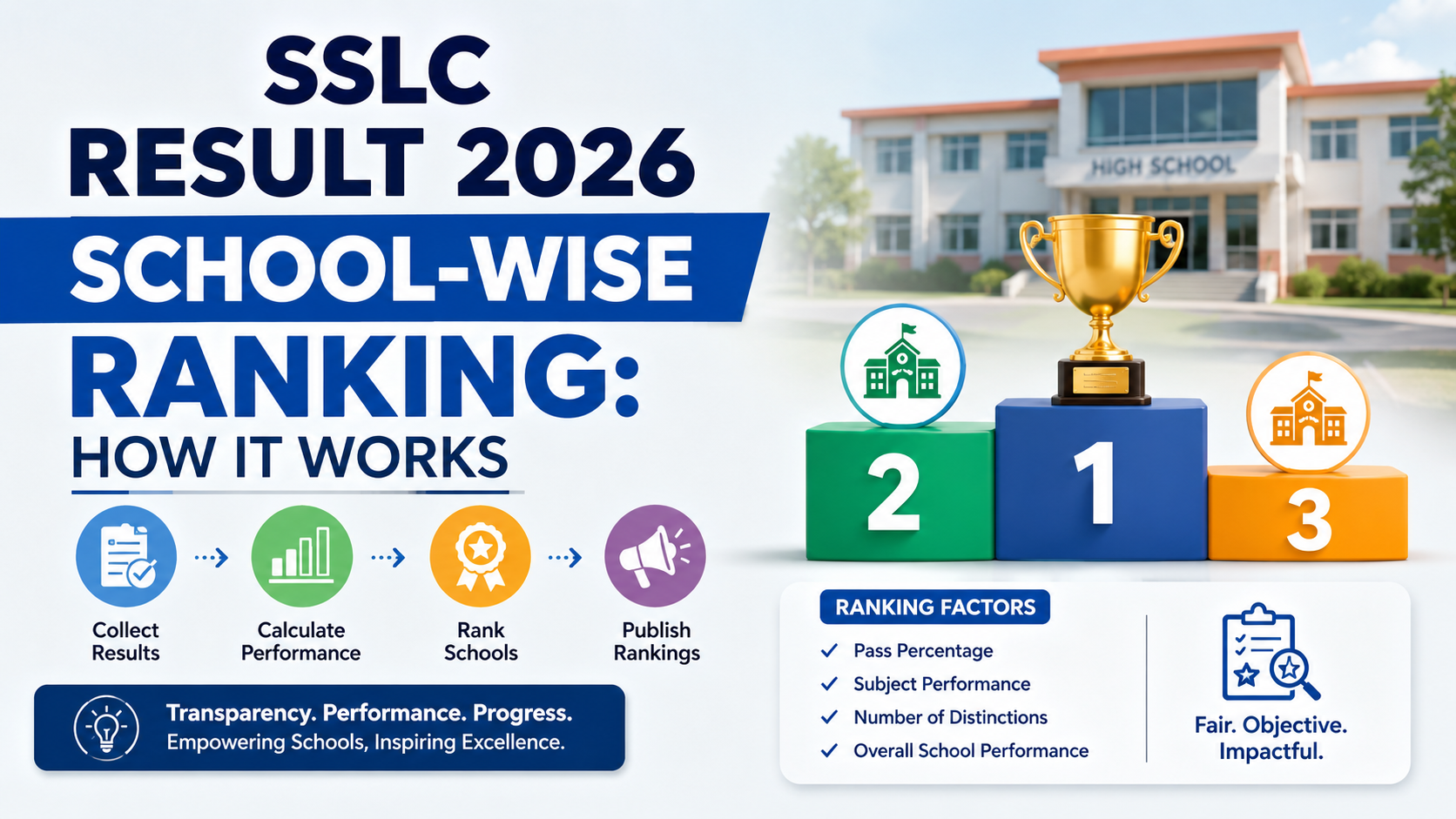
A search for a school wise sslc result often suggests that every school receives an official state rank. That is not how the Karnataka SSLC result system works. The Karnataka School Examination and Assessment Board (KSEAB) publishes individual student results through its official result portal, while school-level performance is better understood through authorised analysis dashboards and verified school records—not through unverified “top school” lists.
For 2026, KSEAB announced the SSLC Exam-1 result on 23 April 2026. The official Karnataka result portal subsequently listed the consolidated SSLC result using the best marks from Exam-1 and Exam-2 as announced on 30 May 2026. This guide explains what school-wise performance means, how to check it safely, and how to interpret comparisons fairly.
Key Takeaways
- Karnataka does not have one all-India SSLC board or one universal school-ranking list.
- Individual SSLC results are accessed through the official KSEAB/NIC result service using a registration number and date of birth.
- A school’s pass percentage is useful, but it is not enough to establish educational quality or an official rank.
- Government school systems use SSLC result-analysis data to review performance by school, district, management, medium, and subject.
- Treat school-created merit lists and third-party rankings as claims unless they link to official, comparable data.
- Online result pages are provisional information; the original marks card remains the authoritative academic record.
What “School-Wise SSLC Result” Means in Karnataka
SSLC stands for Secondary School Leaving Certificate. In India, the term is used by several state boards, so the meaning of a school-wise result depends on the state and examining authority. This article refers to Karnataka SSLC results administered by the Karnataka School Examination and Assessment Board (KSEAB).
A school-wise SSLC result generally refers to a summary such as:
- Number of students registered or appearing
- Number of students who passed
- School pass percentage
- Subject-wise performance
- Number of high scorers or distinctions, where the school chooses to report them
- Comparisons by school management, medium, district, block, or locality
It does not automatically mean that KSEAB has assigned the school “Rank 1,” “Rank 2,” or another statewide position.
The official result page is designed primarily for an individual student’s result. The Karnataka Examination Results portal identifies the relevant 2026 SSLC announcements and links to result lookup pages. The consolidated 2026 page asks for the candidate’s registration number and date of birth; it is not a public school-name search or a school ranking table.
Official 2026 Result Status and Where to Check It
KSEAB’s official result service records two important 2026 SSLC milestones:
| Result item | Officially confirmed date | What it represents |
|---|---|---|
| SSLC 2026 Exam-1 result | 23 April 2026 | Result for SSLC Examination-1 |
| SSLC 2026 consolidated result | 30 May 2026 | Best marks from Exam-1 and Exam-2 |
The dates above are displayed on the official Karnataka Examination Results page. Students should use that portal or links published by KSEAB, rather than result pages promoted through social media, advertisements, or unrelated domains.
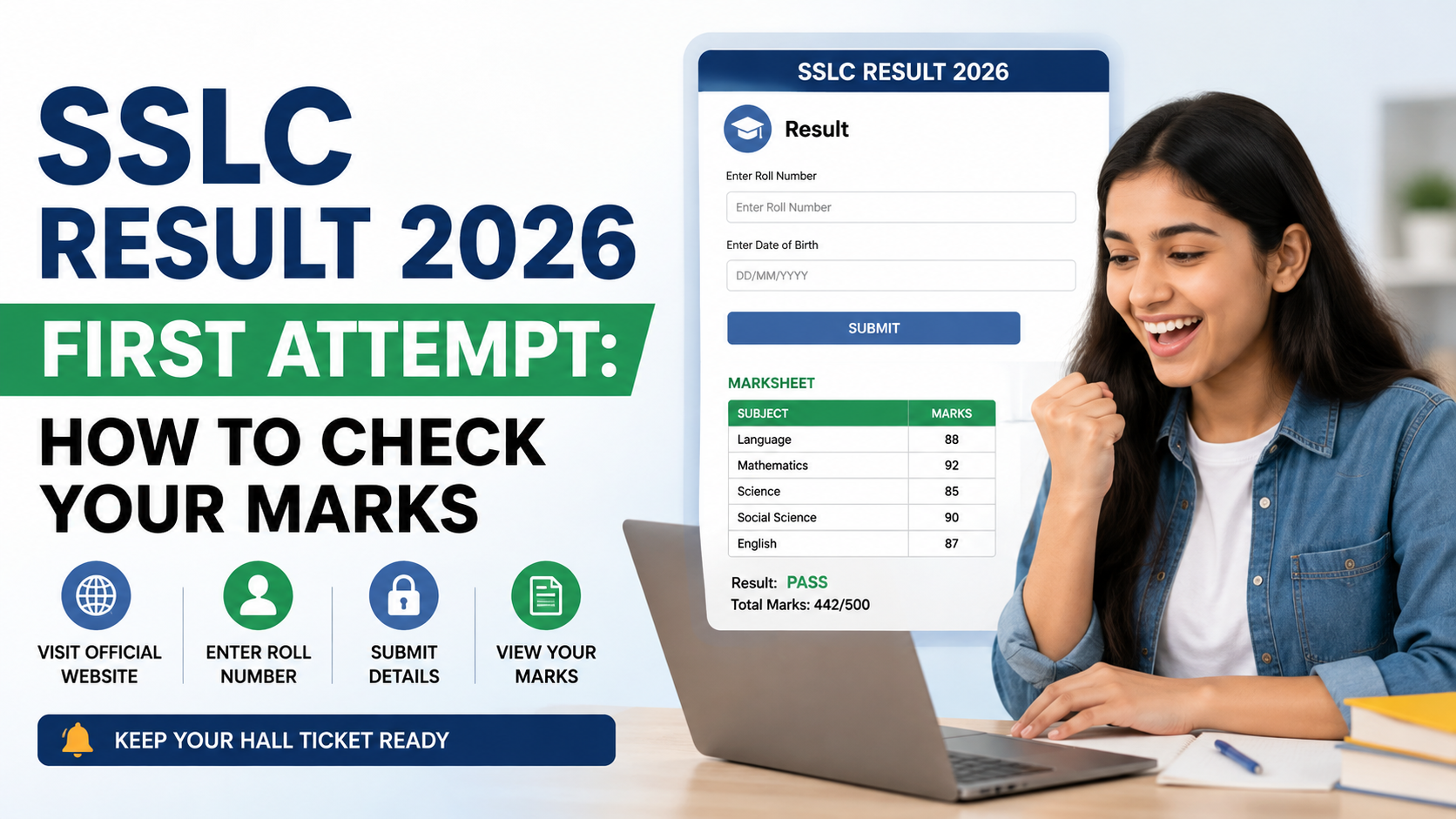
How a Student Can Check an Official Result
- Open karresults.nic.in.
- Select the applicable 2026 SSLC result announcement.
- Enter the registration number exactly as shown on the admission ticket.
- Enter the date of birth in the requested format.
- Review the marks, result status, and personal details.
- Save or print the online result for reference.
- Collect and preserve the original marks card issued through the school.
The official result page states that online results are for immediate information and should not be treated as the original marks sheet. This is important for admissions, document verification, scholarships, and correction requests.
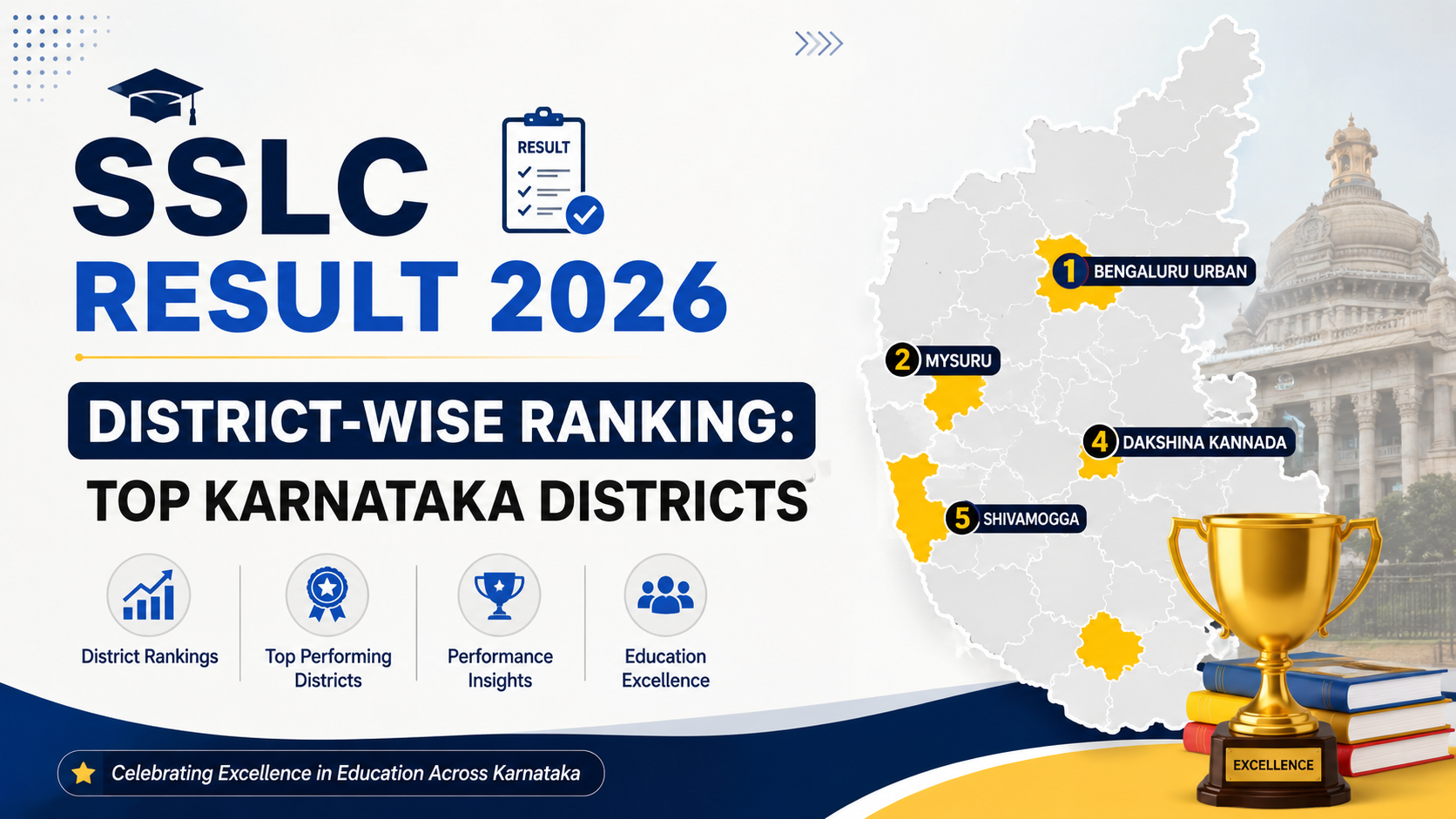
Does KSEAB Publish an Official School-Wise Ranking?
A school’s performance may be available in education-department analysis, but that is different from an official statewide league table.
The public SSLC Result Analysis dashboard presents aggregate performance information across categories such as gender, rural or urban location, medium of instruction, school management, and subjects. This type of reporting supports academic monitoring and improvement.
However, a responsible reader should not assume that a school’s pass percentage creates an official state rank. A ranking requires a defined methodology: the board would need to state which schools are included, which examination attempt is counted, how ties are handled, and whether the comparison uses pass percentage, average marks, number of distinctions, or another measure.
If no such methodology and official list are published, a website calling a school “No. 1” is making its own comparison, not reporting a KSEAB-issued rank.
How School Performance Is Usually Calculated
The most common measure in a school wise sslc result comparison is the pass percentage:
[ \text{Pass Percentage} = \frac{\text{Number of Students Passed}}{\text{Number of Students Appeared}} \times 100 ]
For example, if 114 students appear and 108 pass, the school pass percentage is:
[ \frac{108}{114} \times 100 = 94.74\% ]
This is useful, but it must be read in context.
Why Pass Percentage Alone Can Mislead
A school with 100% results from 12 candidates and a school with 96% results from 300 candidates have both performed well, but the figures describe different cohorts. Pass percentage does not show:
- The number of candidates in the cohort
- Average marks or subject-level outcomes
- Improvement from the previous year
- Student attendance, transfers, or special circumstances
- Support available to the school
- Whether the comparison uses Exam-1 alone or a later consolidated result
For this reason, a school should not be judged solely by a single percentage or a social-media graphic.
A Better Framework for Comparing Schools
Parents, students, and school leaders can use school-wise SSLC data constructively when they compare like with like.
| Comparison factor | Why it matters |
|---|---|
| Examination result used | Exam-1 and a consolidated best-marks result are not automatically interchangeable. |
| Students appeared | A percentage should always be read with the cohort size. |
| Subject-wise results | Identifies whether performance is balanced or dependent on a few strong subjects. |
| Multi-year trend | Shows whether the school is improving, stable, or declining. |
| School context | Management type, medium, location, staffing, and available support affect outcomes. |
| Verified source | Official records and school-issued documents are stronger than reposted lists. |
A practical comparison asks: “How has this school performed over several years, for a similar-sized group of students, and in the subjects relevant to the student’s next step?” That question is more meaningful than asking only which school is “ranked first.”
How Schools Can Prepare a Transparent Result Summary
Schools that publish their own SSLC performance should be precise and transparent. A clear result summary may include:
- Academic year and examination attempt
- Total registered candidates and total appeared candidates
- Total passed and pass percentage
- Subject-wise pass rates
- Marks bands or distinctions, if accurately defined
- Comparison with the school’s own previous-year result
- A note that the school summary is not an official KSEAB statewide ranking
Schools should avoid publishing student registration numbers, dates of birth, detailed marks cards, or personal information without an appropriate lawful basis and consent. Public celebration should never compromise a student’s privacy.
A transparent statement is preferable to a promotional claim. For example:
“In SSLC 2026 Exam-1, 92 of 100 students from our school passed. This is the school’s reported pass percentage and not an official KSEAB state rank.”
Common Mistakes to Avoid When Looking for School-Wise Results
Confusing a Student Topper List With a School Ranking
A student who scores highly may be associated with a school, but that does not establish that the school is top-ranked overall. One student’s result and a school’s cohort-level performance answer different questions.
Mixing Different Result Stages
The 2026 official portal distinguishes the Exam-1 result from the consolidated Exam-1 and Exam-2 best-marks result. Do not compare a school’s Exam-1 percentage with another school’s later consolidated result unless the basis is clearly identical.
Trusting Name-Wise or School-Name Result Claims
The official individual-result service requires candidate credentials. Be cautious with pages claiming unrestricted school-name or name-wise access, especially if they ask for payment, personal details, app installations, or excessive permissions.
Treating a Downloaded Web Page as the Final Certificate
An online result is useful for immediate information. The marks card issued through the board and school process is the document to retain for formal use.
What Parents and Students Should Ask a School
When choosing a school or discussing SSLC performance, ask questions that reveal the full picture:
- How many students appeared, and how many passed?
- Are the figures for Exam-1 only or for the consolidated result?
- What are the school’s results over the last three years?
- Which subjects need the most academic support?
- What remedial classes, counselling, attendance support, or career guidance does the school provide?
- Can the school share a written, dated result summary rather than only a promotional ranking claim?
These questions help families make decisions based on educational support and consistency rather than headline statistics.
Frequently Asked Questions
Can I check the school wise SSLC result by entering a school name?
The official Karnataka SSLC result service is intended for individual result lookup using a registration number and date of birth. For school-level performance, rely on authorised education-department analysis, information supplied by the school, and official KSEAB communications.
Is there an official Karnataka SSLC 2026 school ranking list?
A school-performance analysis is not the same as an official statewide ranking list. Unless KSEAB publishes a ranking with a stated method and source data, do not treat third-party “top school” tables as official.
What is the difference between Exam-1 and the consolidated 2026 SSLC result?
The official portal recorded the SSLC 2026 Exam-1 result on 23 April 2026 and a consolidated result based on the best marks from Exam-1 and Exam-2 on 30 May 2026. Any school comparison should clearly state which result stage it uses.
Is a 100% pass percentage proof that a school is the best?
No. It indicates that all reported candidates passed, but it does not show cohort size, average marks, subject performance, long-term consistency, or the quality of student support. It is one useful indicator, not a complete ranking.
Which SSLC result document should be used for admission or verification?
Use the original marks card issued through the official process. The online result is provisional information for immediate reference, as stated on the official result portal.
Conclusion
The school wise sslc result is best understood as a performance summary, not an automatic official ranking. For Karnataka SSLC 2026, use the official KSEAB/NIC result service for individual results, distinguish Exam-1 from the consolidated best-marks result, and evaluate school claims with cohort size, subject outcomes, multi-year trends, and verified documentation in mind.
Before relying on any “top school” claim, ask the school for its dated result summary and confirm that the comparison uses the same examination stage and method for every school.